
Proudly serving Washington state including - Silverdale, Bremerton, Olympia and nearby
Basement Dehumidifier Installation in Greater Olympia
Powerful, energy-efficient dehumidifiers prevent dampness and mold in your home
At CleanSpace Northwest, we pride ourselves on providing our customers with cutting-edge basement dehumidifier systems. Each of our warrantied systems is rated for energy efficiency and powerful enough to keep dry air circulating throughout the area. These dehumidifiers will ensure your basement is protected from excess moisture that can lead to mold growth and odors, ensuring you have a dry, clean space.
Call us at 1-877-698-0260 or click below to request a free estimate on dehumidifier installation in your basement today! We provide basement waterproofing and moisture control services in Olympia, Bremerton, Silverdale and surrounding areas in Washington.
Our SaniDry™ dehumidifier & air systems
Even a basement with an effective waterproofing system can still develop moisture and mold problems and may feel damp. Concrete walls and floors continually absorb moisture from the soil and release it into the air in your basement, and store bought dehumidifiers simply aren't strong enough to solve the problem.
The latest generation of SaniDry™ dehumidifiers is more powerful and energy efficient than ever! Each one includes a comprehensive, written warranty upon installation. Each SaniDry™ installs with a powerful blowing motor that circulates dry air throughout the space, aggressively drying out your basement or crawl space. Collected water can be drained into a sump pump pit, a section of your perimeter drain, or away via a condensate pump. Our installers can provide you with either of these two award-winning dehumidifier systems:
SaniDry Sedona Dehumidifier
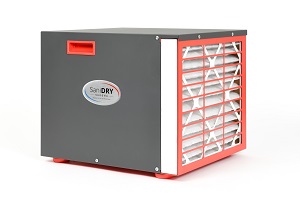
The SaniDry Sedona is the world's most efficient, high-performance dehumidifier and filtration system, without a bulky heat exchange core. With its small size, it takes up less space in a basement and easily fits in small crawl spaces.
Benefits:
- Eliminates damp, musty odors by drying and filtering air
- Costs less to run than other dehumidifiers
- Filters mold spores, dust mite droppings, dust and other particles
- Set it and forget it - Sedona does the rest with automatic drainage and humidity sensing
System features:
- Removes up to 95 pints of water per day
- Moves over 300 cubic feet of dry air per minute
- Can be ducted
SaniDry XP Upright Dehumidifier
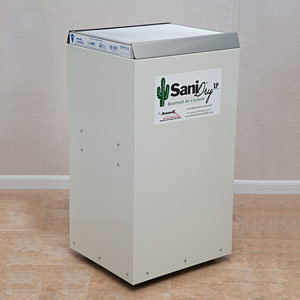
For most basements, our SaniDry™ XP Basement Air System is the ideal choice. This model can easily be stored in a corner or closet so it doesn't interfere with a finished basement.
System features:
- Digital control panel
- Ductwork compatibility for drying finished spaces
- Removes up to 109 liters of water per day
- Dries up to 2,500sq. ft. in a 8 ft. high basement
- Air filter removes particles as small as 2 microns
We can help you create a drier, healthier home!
If you've waterproofed your basement, a reliable, low-maintenance dehumidifier system is a final touch that makes a big difference! You'll love how dry and clean our systems can make your basement feel! These systems work perfectly with our other basement waterproofing products or as a standalone option.
To schedule a dehumidifier installation quote with one of our experienced waterproofing professionals, contact CleanSpace Northwest by phone or e-mail today! We proudly serve Olympia, Bremerton, Silverdale, Bainbridge Island, Port Angeles, Port Orchard, Poulsbo, Belfair, Shelton, Port Townsend and many surrounding areas in Washington.
Looking for a price? Get a no cost, no obligation free estimate.
our service area
We serve the following areas
- Allyn
- Bainbridge Island
- Belfair
- Bremerton
- Brinnon
- Carlsborg
- Chimacum
- Gig Harbor
- Grapeview
- Hansville
- Hoodsport
- Indianola
- Joyce
- Keyport
- Kingston
- La Push
- Lilliwaup
- Matlock
- Neah Bay
- Nordland
- Olalla
- Olympia
- Port Angeles
- Port Hadlock
- Port Ludlow
- Port Orchard
- Port Townsend
- Poulsbo
- Quilcene
- Seabeck
- Sequim
- Shelton
- Silverdale
- Suquamish
- Tahuya
- Union
- Vaughn